
Who Says You Can’t Have it All? Jesus.
On Monday morning I received the following email from a church member.
“Good Morning Doug! I wanted to tell you how much I valued your sermon yesterday. Stepping stones and stumbling blocks are a good thing to remember for the week and I look forward to reading the chapter tomorrow.
Yesterday I arrived at church early and parked in the front. After the service I was walking to my car past a steady stream of cars leaving from the big parking lot. I got into my car turned it on, put it in reverse and waited for someone to be a “stepping stone” for me so I could back out. I edged slowly back so people would know that I was there. Well interestingly enough there must have been 30 cars that went by. Actually no one stopped so I could get out, even when the cars exiting church were backed up past me.
June 23, 2013
Matthew 19:16-22, Who Says You Can’t Have it All? Jesus.
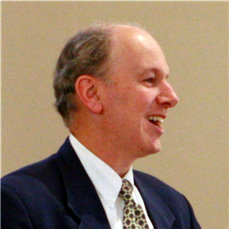
Doug Scalise, Brewster Baptist Church
[vimeo 69011520 w=500&h=375]
[powerpress]
I just started chuckling to myself, not mad, not upset, just waiting…. I started thinking while I was waiting and thinking about the hospitality of people. There were church members that drove by me. I think that is what bothered me the most. I wonder how many people realized that they were “stumbling blocks” as they went by with their goal of getting out of the church and onto 6A. If I had been a visitor what would I have thought? Probably the same thing that I did think: that no one thought to take a moment to let a car back out.
One thing this experience did teach me is a simple act of kindness to someone is a “stepping stone” and usually the end result is that you feel good that you did something nice for someone.” I hope you all can keep that in mind when you are leaving today.
This morning is the second week of our series on Encounters with Jesus. Last week the focus was a on a child and the disciples, today, the scripture is about a young man. Listen to Matthew 19:16-22 (NIV)
Just then a man came up to Jesus and asked,
“Teacher, what good thing must I do to get eternal life?”
“Why do you ask me about what is good?” Jesus replied. “There is only One who is good. If you want to enter life, keep the commandments.” “Which ones?” he inquired. Jesus replied, “‘You shall not murder, you shall not commit adultery, you shall not steal, you shall not give false testimony, honor your father and mother,’ and ‘love your neighbor as yourself.’”
“All these I have kept,” the young man said. “What do I still lack?”
Jesus answered, “If you want to be perfect, go, sell your possessions and give to the poor, and you will have treasure in heaven. Then come, follow me.”
When the young man heard this, he went away sad, because he had great wealth.”
 Picture a man who has what our culture values most: he is young and wealthy. Popular culture emphasizes the belief that youth and wealth are what lead to happiness and a meaningful life. So why is this young man with great wealth walking sadly away from Jesus? What’s wrong with this picture? If you have a daughter – this young man is the kind of guy you want your daughter to marry. He seemingly has it all – morality, financial means, an interest in eternal things. What did he lack?
We have to listen closely to the conversation between the man and Jesus so that perhaps we, unlike the man, can leave this encounter with Jesus with joy and not sadness. “Just then a man came up to Jesus and asked, “Teacher, what good thing must I do to get eternal life?” He addresses Jesus as “Teacher” which signals he’s an outsider. If you’ve been reading through Matthew’s Gospel really closely you may have noticed that the disciples address Jesus as “Lord.” Since the man doesn’t use that word, we know the seeker is not yet a follower of Jesus; his heart has not yet been converted to living for Jesus instead of just for himself.
Jesus’ answer reveals the heart of the matter. The question is not what good thing we must to do to get or possess eternal life. Jesus wants his questioner and all of us to see clearly that we can’t possess life, we enter life. This is a story about trying to get or possess something which can’t be possessed. One doesn’t get eternal life simply by grabbing it like a bag of potatoes at the grocery store.
Jesus’ reply, “Why do you ask me about doing good, there is only One who is good (obviously meaning God)” is humbling for any of us who think Jesus is pretty good. After all, if you go to Jesus because you think he is a really good Teacher and Jesus is self-deprecating about his goodness, where does that put us? Jesus says, “If you want to enter life, keep the commandments.” Reading Matthew’s Gospel, you may have noticed that Jesus is an advocate of the law (what to us are the first five books of the Hebrew Bible or Old Testament) not its opponent. Jesus points the man to following the commandments. Just like the lawyer in Luke 10 who in seeking to justify himself asks Jesus, “Who is my neighbor?” the man in today’s encounter when told to keep the commandments asks, “Which ones?”
In response, Jesus mentions the six commandments of the Ten Commandments devoted to human relationships and what to Jesus is part of the Greatest Commandment – loving our neighbor. Jesus is reminding the man that when we enter life there are implications for our relationships with other people. Jesus is gracefully trying to help him look outside of himself. The young man says to Jesus, ““All these I have kept, what do I still lack?”
This is the first time in the encounter that we’re told his age. He must have been very young and very good to keep all of these commandments! It’s also possible the young man doesn’t have an accurate perception of himself. He may be overrating his own goodness and seeking to do good in order to get something more for himself. This is not the kind of goodness God desires.
God wants goodness for the right reasons. A long time ago, an angel came to a man and said, “Behold, you have been found worthy – and I have come to offer you a gift. You may have the gift of healing touch which will enable you to heal the gravest illnesses and diseases.” The man replied, “No, thank you.” “Well,” the angel said, “what about the gift of the conversion of hearts? Through your compassionate listening and persuasive speaking many people will have their hearts changed.” The man replied, “No, thank you.” By now the angel, who wasn’t used to being turned down in this way, was getting a little frustrated. “What about the gift of heroic virtue? You may go anywhere in the world and live a life of great courage and godliness.” The man replied, “No, thank you. I am quite content where I live.” “What gift would you accept?” the angel asked in exasperation. The man thought for a long time. Finally he said, “The gift of doing good and not knowing it.” And it was granted.
From then on, wherever his shadow fell there was a blessing – of healing, a changed heart, greater courage, deeper devotion. But he never knew the impact he had on the lives of others. God wants goodness for the right reason. Goodness is not one more possession we get or cling to as we seek a meaningful life.
Jesus is trying to help the young man and us to think and see in new ways to free us from our possessiveness. Jesus says to the young man, “If you want to be perfect,” the word translated as perfect (teleios) doesn’t mean perfect in the sense of sinless, but “whole, undivided, or mature.” It’s the same word used in Matthew 5:48 where all who would follow Jesus are urged to be teleios, whole, undivided, mature, even as God is whole and undivided. Jesus continues, “go, sell your possessions and give to the poor, and you will have treasure in heaven. Then come, follow me.”
When Jesus tells someone to follow him, it’s often his way of saying, “You better stick around and follow me because you’re going to need a lot more help.” Jesus can see the young man wants to be whole and mature, but the way he’s going about it is wrong. The approach of possessing and getting will not get us the life we want. Buying and possessing will not enable us to be whole, because we can’t possess life, we enter it. On Thursday night Jill and I watched a very interesting movie called The Way with Martin Sheen and Emilio Estevez. The film is about a man walking the Camino de Santiago in Spain which is the pilgrimage route to the Cathedral of Santiago de Compostela in Galicia in northwestern Spain. He decides on the spur of the moment to make the journey to cope with the loss and grief in his life. At one point in a flashback the man is having a conversation with his son who is leaving to go to Europe and the dad who is an ophthalmologist says, “This is the life I chose.” His son replies, “You don’t choose a life, you live one.”
Jesus is making that point with the young man – we can’t get eternal life, we can’t possess eternal life, we can’t chose eternal life, in fact, Jesus tells the man what he needs to do is not to acquire, but to sell. The first thing he needs to sell is the idea that we can possess life. We can’t. While many people associate possessions with happiness and fulfillment, Matthew and Jesus seem to be making a connection between possessions and sadness. Matthew has carefully framed the story so it begins with a desire to get or possess and ends with possessions. The young man didn’t get eternal life but he got to keep his possessions and his sadness – the underlying sense that something was missing in his life.
It may surprise us that Jesus is saying that sadness and possessions can be partners. There can be a relationship between depression and the unending images and messages that shopping, buying, and the joy of getting things are the key to happiness. Make no mistake; possessions often take possession of the possessor. Possessions can end up possessing us. Jesus is trying to teach the young man that there can be tension between wanting to be whole and mature and how we try to get there. Like him, we often can’t figure another way to life except grabbing it like a bridal gown at Filene’s Basement in Boston. Jesus wants to deliver us from what possesses us so we are free to lean that Eternal life is something we enter, that we live; it is a way of seeing and a way of being, but eternal life is not something we get or possess on our own.
Jesus answer to the young man applies to each of us. Our yearning for wholeness and fulfillment is not achieved the way many people attempt or expect. The question Jesus posed is one each of us faces every day of our lives: Will I try to achieve meaning, purpose, and contentment by my efforts at getting stuff I think I need, or through entering into God’s will for my life wherever it leads me?” The young man came to Jesus to figure out what he lacked, however the key was not what the young man lacked, but what he possessed. He was holding on so tightly to what he thought was his, that he couldn’t open his hands and his heart to receive Jesus’ invitation to enter into eternal life by following him.
The young man reminds me of an old man in another story. “Once upon a time there was an old man from the lovely island of Crete. He loved his land with a deep and beautiful intensity, so much so that when he perceived that he was about to die he had his sons bring him outside and lay him on his beloved earth. As he was about to expire he reached down by his side and clutched some earth into his hands. He died a happy man.
Then he appeared before the gates of heaven. God, appearing as an old white bearded man like himself, came out to greet him. “Welcome,” he said. “Enter into the joys of heaven.” But as the old man started to enter the pearly gates, God said, “Please. You must let the soil go.” “Never!” said the old man stepping back. “Never!” So God departed sadly, leaving the man outside the gates. A few eons went by. God came out again, this time as an old buddy. They told some stories about the days of their youth and then God said, “All right, now it’s time to enter into life, friend. Let’s go.” And they started for the pearly gates. And once more God requested that the old man let go of the soil and once more he refused.
More eons rolled by. God came out once more, this time as a delightful and playful granddaughter. “Oh, granddaddy, you’re so wonderful and we all miss you. Please come inside with me.” The old man nodded and she helped him up because by this time he had grown very old and arthritic. In fact, so arthritic that he had to prop up his right hand holding Crete’s soil with his left hand. They moved toward the pearly gates and at this point his strength quite gave out. His gnarled fingers would no longer stay clenched in a fist with the result that the soil sifted out between them until his hand was empty. He then entered into heaven. The first thing he saw was his beloved island.”
It is often only in giving up what we cling to with the greatest tenacity – ourselves, our reputation, our money, our possessions, our past, our self-justification – that we’re liberated to enter into the life, freedom, and future God desires for us. Who says you can’t have it all – well, actually, Jesus does. Those possessed by their possessions invariably go away from Jesus sad. Those who understand that any wealth or possessions we temporarily are managing, however great or small, are a tool to accomplish God’s will and assist other people, go away from Jesus with gratitude and joy for all that God has given and because God has enabled us to share with others.
What a contrast to the young man in this Gospel story is the person in Matthew 13:44 who joyfully sells all that he has to enter the treasure of God’s kingdom. The one with the possessions and wealth is sad, downcast, and grieving. The one who sold all that he had for the sake of entering into the life Jesus offers has great joy and contentment. Who do you want to be like? How will we go away when confronted by the words of Jesus to sell, give, and follow? How will we respond to Jesus?
Blessing
May the grace of the Lord Jesus Christ, and the love of God, and the fellowship of the Holy Spirit be with you all. 2 Corinthians 15:14