The Spirit Unites Us In Christ
In a healthy family, a mother serves as a source of unity. Siblings can be very different and sometimes have virtually nothing in common, yet they all are united by the fact that they have the same mother who – ideally and hopefully – loved, nurtured, sacrificed, educated and cared for them. I shared at Ann’s service that one woman (Elaine Heffner) noted, “The art of mothering is to teach the art of living to children.” Mother’s do this by deeds and by words. Mother’s have truths and sayings they teach their children, these can vary from one mother to another, although there are some that seem to be almost universal. Things like, “If you don’t have anything nice to say….don’t say anything at all.” “I am not your…maid.” “Are you going out…in that?” “Call me when you… get there.” “Do you think I’m made of… money?” “I was never bored when I was… your age.” “How many times do I have to… tell you?” “Enough is…enough.” That probably is. Each mother also has things she says in particular. One of the things my mother always said to me and my sisters was, “Be your best self.”
May 12, 2013
Ephesians 4:1-6, The Spirit Unites Us In Christ
Doug Scalise, Brewster Baptist Church
[vimeo 66066232 w=500&h=375]
[powerpress]
There is a sense in which Ephesians 4:1-6 is about a similar dynamic to the one I’ve just described about a mother’s role in a family. For Paul, the Spirit helps to unify the different people who compose the church, the way a mother can be a source of unity in a family with several children. In these verses, Paul is basically urging the individuals who make up the family of God to “Be your best self,” and he mentions some of the qualities that make up that best self. Listen to the scripture:
“I therefore, the prisoner in the Lord, beg you to lead a life worthy of the calling to which you have been called, 2 with all humility and gentleness, with patience, bearing with one another in love, 3 making every effort to maintain the unity of the Spirit in the bond of peace. 4 There is one body and one Spirit, just as you were called to the one hope of your calling, 5 one Lord, one faith, one baptism, 6 one God and Father of all, who is above all and through all and in all.”
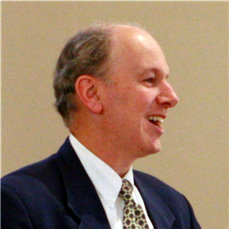 Think of someone you’ve known who embodied the qualities Paul describes “humility, gentleness, patience, bearing with one another in love.” When I think of someone who embodied those Christian virtues, I think of my mother, my wife Jill, and another person is Fred Rogers, who I can’t believe died ten years ago. Better known as Mister Rogers, he was the host of Public Broadcasting’s longest running television series. Mister Roger’s Neighborhood began when I was in pre-school. I can remember coming home and watching the program when I was 4 and 5 years old. Of course, I had no way of knowing that 30 thirty years later the interim pastor I would follow at Brewster Baptist Church, Dr. Bill Barker, was the voice of Dr. Bill & Elsie Platypus, two of the characters I saw on that program as a child.
I remember when Fred Rogers died that part of why I was sad was because I fear that so much of what he embodied is no longer valued or practiced by much of our culture and it almost seems in danger of disappearing. As one editorial observed, Mr. Rogers was “a model of kindness – a trait not coveted enough these days. Being rich appeals to people. So does being hip, connected, and successful. But kind, patient, and friends with the delivery man doesn’t seem to carry the same clout.”
When asked in 1993 whether he ever got tired of playing Mr. Rogers he replied, “My wife says what you see is what you get. It’s not hard for me to be me. This program is not a show.” Ted Koppel spoke of what a kind, gentle man Fred Rogers was and shared how Mr. Rogers had won two Peabody Awards, four Emmy’s, and the nation’s highest civilian honor the Presidential Medal of Freedom. Fred Rogers spoke slowly, calmly, and gently. He listened. His way of being on television is the polar opposite of what one sees on many programs today. Too many shows feature yelling, bad manners, interruptions, insults, a lack of virtue, and demeaning speech rather than genuine dialogue, listening, an attempt to understand and to think deeply. Mr. Rogers, who was an ordained Presbyterian minister, also said something that takes us back to Ephesians. “There is a universal truth I have found in my work. Everybody longs to be loved. And the greatest thing we can do is let somebody know that they are loved and capable of being loving.” PBS President Pat Mitchell said about Fred Rogers, “He is somebody who is completely integrated. He is somebody who is what he believes. His life and his work and who he is inside are one person.” For those of us who follow Christ, we can have no greater tribute: that we are what we believe. We are to lead a life worthy of the calling to which we have been called with “humility, gentleness, patience, and bearing with one another in love.”
Paul believed so strongly in Christ and what a difference Jesus made in a person’s life, that he was willing to go to prison for the Lord. Paul is writing the church in Ephesus from prison, where he most likely would have been in chains, urging each person in the church to be “making every effort to maintain the unity of the Spirit in the bond of peace.” What holds the different members of the church in place – not the fetters or chains that hold Paul in prison, rather it is the fetter, the bond of peace. Are we making every effort to do that? To, “maintain the unity of the Spirit in the bond of peace.” Yesterday the wedding of Jane Wallbrown’s son Sheldon and his bride Parul was held here at BBC. As at so many weddings, they exchanged rings which are a symbol of love which has no end and also they are a visible sign that Sheldon and Parul are bound to each other for life. When two people get married, they learn quickly that “making every effort to maintain the unity of the Spirit in the bond of peace,” is a wise way to relate to one’s spouse. Both in a marriage and in church the saying is true, “In essentials, unity; in doubtful questions, liberty; in all things, charity.”
This past week Dallas Willard, one of the persons whose writing and teaching has most influenced my approach to discipleship, spiritual formation, and the Christian life, passed away at the age of 77. Dallas wrote books such as The Spirit of the Disciplines, In Search of Guidance, Renovation of the Heart, and The Divine Conspiracy – all of which are marked by their intellectual and spiritual depth and insight. They are not Christian lite reading, they are weighty and substantive. During my sabbatical ten years ago I was blessed to take a doctoral level class on Spirituality and Ministry with Dallas at a retreat center in California and it was terrific. One of Dallas’s statements that has stayed with me is this one from The Spirit of the Disciplines, “Contemporary American churches in particular do not require following Christ in his example, spirit, and teachings as a condition of membership—either of entering into or continuing in fellowship of a denomination or a local church…. Most problems in contemporary churches can be explained by the fact that members have not yet decided to follow Christ.”
Throughout his letter to the Ephesians and especially from chapter 4-6:24, Paul is urging the congregation to focus on the primary goal of the church to help people follow Christ in his example, spirit, and teaching; to grow in Christlikeness and to remember the essentials and principles that unite us and hold us together. Pastor Leith Anderson wrote about the contemporary church, “While the New Testament speaks often about churches, it is surprisingly silent about many matters that we associate with church structure and life. There is no mention of architecture, pulpits, length of typical sermons [or sermons], rules for having a Sunday school. Little is said about style of music, order of worship, or times of church gatherings. There were no Bibles, denominations, camps, pastor’s conferences, or board meeting minutes. Those who strive to be New Testament churches must seek to live its principles and absolutes, not reproduce the details.”
“Now you might ask yourself, Why does the New Testament say nothing about all those matters to which the usual congregation today devotes almost all its thought and effort? Answer: Because those matters are not primary and will take care of themselves with little attention whenever what is primary is absolutely cared for. Pay attention to the “principles and absolutes” of the New Testament church and, one might suppose, everything else will fall into place – in large part because “everything else” really doesn’t matter much one way or the other.”[1] What are those principles and absolutes, those essentials, Ephesians 4 tells us much of what we need to know: Live with “humility, gentleness, patience, bearing with one another in love. There is one body and one Spirit, one hope of your calling, one Lord, one faith, one baptism, one God and Father of all.”
When I began I shared the quote, “The art of mothering is to teach the art of living to children.” Mother’s do this both by deeds and by words. Jesus came to do the same thing, to teach us the art of living in deeds and words. In his book, In Search of Guidance, Developing a Conversational Relationship with God, Dallas Willard shares the following illustration (p. 227-228): One time an intelligent and serious man approached the great Christian preacher and leader John Wesley (1703-1791) and said to him, “I hear that you preach to a great number of people every night and morning. Pray what would you do with them? Whither would you lead them? What religion do you preach? What is it good for?” Wesley replied:
“I do preach to as many as desire to hear, every night and morning. You ask, what would I do with them: I would make them virtuous and happy, easy in themselves and useful to others. Whither would I lead them? To heaven; to God the Judge and lover of all, and to Jesus the mediator of a New Covenant. What religion do I preach? The religion of love; the law of kindness brought to light by the gospel. What is this good for? To make all who receive it enjoy God and themselves: to make them all like God; lovers of all; contented in their lives; and crying out at their death, in calm assurance, “O grave, where is thy victory! Thanks be unto God, who giveth me the victory, through my Lord Jesus Christ.”
John Wesley also said, “I have learned more about Christianity from my mother than from all the theologians of England.” So did I. Susanna Wesley wrote, “There are two things to do about the gospel – believe it and behave it.” The history of Christianity and the world has been shaped by women who sought to obey God and to teach their children to do the same. Our mothers want us to live our lives well and be our best selves. Jesus came to respond to the universal human need to know how to live well. He came to show us how, through reliance on him, we can best live in the world as it really is. The Spirit is the one who reminds us of all Jesus taught and unites us, as different as we may be individually as brothers and sisters, into one family, that is the church. Together we share “one body, one Spirit, one hope, one Lord, one faith, one baptism, one God who is above all and through all and in all.” It is up to us to welcome the one Spirit into our lives.
Catherine of Genoa (1447-1510) described opening her life to the presence of the Holy Spirit this way, “It is as if I have given the keys of my house to Love with permission to do all that is necessary.” Are we willing to do the same?
Prayer: Lord, help us to give the keys of our house to your Spirit, letting you have complete control. Give us the trust to invite you into every room. Don’t come as an occasional guest who we are relieved to see depart or to whom we don’t open everything – enter and become the Owner of the whole house. We do not want to turn our eyes from you, O God. There we want them to stay and not move no matter what happens to us, within or without. Adapted from a writing by Catherine of Genoa.
Blessing: May the God of hope fill you with all joy and peace in believing, so that you may abound in hope by the power of the Holy Spirit. Romans 15:13
For Further Reflection and Application
- Yield to the work of the Spirit. If you have never done so, consider taking an hour in prayer to ask the Holy Spirit to begin working in your life in a new and powerful way. Make no demands, have no expectations. Your only task is to truly surrender yourself to God and open the door for the Spirit to come in and begin changing the way you think and live.
- Nurture the growth of the fruit of the Spirit. Paul says in Galatians 5 that we are responsible for living by the Spirit and being guided by Spirit. Set aside 15 minutes to meditate on the list of the fruit of the Spirit (love, joy, peace, patience, kindness, generosity, faithfulness, gentleness, and self-control). Ask for divine guidance to show you which of these virtues needs to be more evident in your life. Ask the Holy Spirit to begin working on your mind and heart in this area.
- Use your spiritual gifts in some way to bless God, build up the church, and serve people. If you have never done so, plan on doing a spiritual gifts discovery sometime this year.
- Read the Bible with the Holy Spirit. As you read pray that the Holy Spirit will highlight what you need to hear at that particular moment. When that verses, sentence, or phrase is identified, spend 10-15 minutes reflecting on why it may have struck you and what it is God may be wanting you to understand.
- Listen to the Advocate when making decisions. Romans 8:14 and Galatians 5:25 speak of being led by the Spirit of God. One of the most important and basic ministries of the Spirit is to provide guidance in our lives. Especially when facing important decisions we are wise to ask the Spirit in prayer for direction, leading, wisdom, and insight. We often will discern the Spirit’s leading in an intuitive sense, a word spoken by a friend, or the opening or closing of a door of opportunity. In all decisions we test the Spirit by examining the Scriptures. The Spirit of God will not lead us into a decision that is contrary to the principles given to us in the Bible.
What can we expect to see happening in our hearts, minds, and lives that is evidence of the Spirit’s presence living and acting within us? The Holy Spirit is able to:
- Give us a sense of unity with Jesus
- Lead us into all truth
- Help us worship God
- Guide us in making decisions
- Illuminate our study of the Bible
- Motivate us to action
- Give us the right words as we share our faith with others
- Soften the minds and hearts of those with whom we share our faith
These are works of the Spirit all of us can expect to see in our lives, however, we should not necessarily expect dramatic or instantaneous results.