
Overhearing A Prayer
One of the things that Christians know we should do yet often struggle to do or feel inadequate about is prayer. How many of us could say, “I am very confident and comfortable with the prayer in my life, I pray more than enough and my prayers are impactful and effective.” I think far more people feel they have a lot to learn about prayer and aren’t terribly comfortable praying out loud in front of other people.
July 29, 2012
Ephesians 3:14-21, Overhearing A Prayer
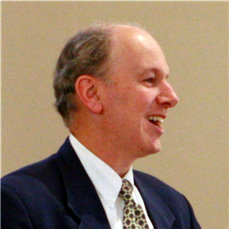
Doug Scalise, Brewster Baptist Church
[powerpress]
How many of us would be comfortable standing here at the microphone and praying for everyone else to hear? The Apostle Paul knew a little about prayer and he was more than happy to offer a prayer that other people could hear and learn from. One of his prayers is found in his letter to the Ephesians, a book I will be preaching from for the next five weeks. In chapter 3 beginning at verse 14 we’re invited to overhear a prayer. Let’s listen.
14 For this reason I bow my knees before the Father, 15 from whom every family in heaven and on earth takes its name. 16 I pray that, according to the riches of his glory, he may grant that you may be strengthened in your inner being with power through his Spirit, 17 and that Christ may dwell in your hearts through faith, as you are being rooted and grounded in love. 18 I pray that you may have the power to comprehend, with all the saints, what is the breadth and length and height and depth, 19 and to know the love of Christ that surpasses knowledge, so that you may be filled with all the fullness of God.
20 Now to him who by the power at work within us is able to accomplish abundantly far more than all we can ask or imagine, 21 to him be glory in the church and in Christ Jesus to all generations, forever and ever. Amen.
Prayer begins with an attitude of humility. The first seven words of this text — “I bow my knees before the Father” — make it clear that we are overhearing a prayer and prayer requires us to acknowledge that we are not God – God is. Given our egos and the human desire for power, control, and getting our own way such a confession can be difficult. In this passage the riches and power are God’s. In prayer, we are the recipients of grace, not the donors. Paul’s posture in prayer of kneeling recalls the words of Psalm 95:6-7, “O come, let us worship and bow down, let us kneel before the Lord, our Maker! For he is our God, and we are the people of his pasture, and the sheep of his hand.” Praying with humility is a way of acknowledging our desire to be in relationship with a God who is greater than us and whose love and power bless our lives.
H.A. Ironside shares the story of a godly man named Andrew Fraser who went to Southern California to recover from a serious illness. Though this old Irishman was quite weak, he opened his worn Bible and began expounding the truth of God’s word in a way that Ironside had never heard before. Ironside was so moved by Fraser’s words that he asked, “Where did you learn these things?”
The sickly Fraser replied, “My dear young man, I learned these things on my knees on the mud floor of a little sod cottage in the north of Ireland. There with my open Bible before me, I used to kneel for hours at a time and ask the Spirit of God to reveal Christ to my soul and to open the Word in my heart. He taught me more on my knees on that mud floor than I ever could have learned in all the seminaries or colleges in the world.”[1] While I am a strong advocate for higher education, it is best accompanied by “lower” education in humble prayer, in terms of our posture and attitude. Like Paul on his knees in prison or Andrew Fraser on his knees in his cottage, God can teach and share a great deal with us when we approach God in humility.
 When we humbly seek God in prayer, we will discover that prayer is a source of power. Paul prays that the church will be strengthened with power through God’s Spirit (verse 16). God’s Spirit renews, strengthens, and gives us power for living. That power is available to everyone in the church. All the references to “you” and “your” in these verses are plural. This makes it clear that it’s the community being lifted to God here. If overhearing Paul’s prayer reveals something of ourselves to us, the first revelation to be gleaned is that experiencing fellowship with God is tangled up in being bonded to each other. Christians are blessed with each other — and stuck with each other – whether we like it or not. Maybe Snoopy, Charlie Brown’s philosophical beagle in the Charles Schulz comic strip, “Peanuts,” said it best: “I love humanity; it’s people I can’t stand.” Our lives as Christians depend on community with each other, in all its messiness, which isn’t easy at times.
The prayer Paul is praying and advocating for is prayer within and by and for the church. He prays the church will have the power to comprehend or understand the love of Christ that is beyond knowledge. As Paul writes elsewhere, knowledge “puffs up,” it can make us think more highly of our selves or opinions than we should, but love builds up. In verse 20, Paul affirms the greatness of the power at work within us to accomplish more than we think possible. When we humbly seek God’s power in prayer, we will discover that prayer is the language of love. Praying enables us to be “rooted and grounded in love” (3:17). Rooted in God’s love for us, prayer is an expression of our love for God. Just as the root systems of trees intertwine beneath the surface and so reinforce one another in times of storms and stress, so in the church our love and prayers help us to hold fast when we might otherwise crack and fall. This is necessary because we know Christians can be every bit as territorial and opinionated as anyone else. No wonder Paul’s prayer begins with a petition for the presence of the Trinity to move in and dwell with us. God forges us into communities, and then it takes nothing less than the power of the Trinity to keep us there. Paul’s prayer suggests that progress will be slow — a root growing into a crop inching toward fruitfulness, a building grounded in a good foundation rising brick by brick, both anchored in a love that can do what knowledge cannot (verse 19). Prayer is the language of love and how do we, how should we, communicate with someone we love? Hopefully we speak lovingly, openly, specifically, and honestly. We guard our speech and ask if what we’re saying is kind, truthful, and necessary. If not, maybe we shouldn’t say it. We also take time to listen to the other person’s needs and concerns. In the same way in prayer we speak with God openly and honestly and we take time to listen for God’s voice as well.
Because prayer is the language of love, prayer is multidimensional; it takes on the “breadth and length and height and depth” of the love of Christ which is always broader than our limited human love. Is our prayer life wide enough to reach out to others who are different than we are, is it long enough to patiently persist, is it high enough to praise God, is it deep enough to deal with profound or overwhelming need? God invites us in prayer to share the real needs and concerns of our hearts, but there are many dimensions to prayer beyond our asking for things including confession, silence, and listening. Saint Benedict wrote, “It is fitting for the Master to speak and to teach, but the disciple should be silent and listen.”
I believe that people who pray may become more like Jesus. The “fullness of God” Paul speaks of in verse 19 is Jesus. If we’re going to be filled with the fullness of God that means we may need to empty our heart and spirit of other things that would crowd Jesus out. Much of the “filling,” “dwelling, and “glory” language of the book of Ephesians, connects to Old Testament traditions of the glory of God filling the worship spaces of the tabernacle and temple. In Exodus, the wilderness tabernacle, once completed, fills with the cloud of the divine presence (Exodus 40:34-38). At the completion of Solomon’s temple in 1 Kings, the glory of God comes down to fill the “holy of holies” (1 Kings 8:10-11). The prophet Ezekiel’s vision of the new temple of a purified Israel leads to the same scene: the glory of God fills the new temple of a future restoration (Ezekiel 43:2-5). In Ephesians, the human community of mainly non-Jewish believers is envisioned as a “dwelling place” for God. The apostle prays for God to “fill” this new “dwelling place” that is the church. The apostle prays for a church filled in every dimension by God, with God and for the glory of God.
Paul specifically prays “that Christ may dwell in your hearts” (3:17). Has praying helped you in any way to become more like Jesus? The life of Jesus was marked by serving, giving, loving, discipling, sharing, and reaching others. How has praying impacted how we give of our self, and our time, talent, and treasure? Thomas a Kempis wrote in The Imitation of Christ, “It is a matter of great skill to know how to converse with Jesus; and to know how to keep Jesus, a point of great wisdom. Be thou humble and peaceable, and Jesus will be with thee. Be thou quiet and devout, and Jesus will stay with thee.” Jesus longs to dwell within us and with us always.
Prayer enlarges our vision and goes beyond our expectations. When we pray we may be surprised by God answering in ways “far more than all we can ask or imagine.” For many years our church has participated in Operation Christmas Child. One story I remember reading about came as Operation Christmas Child boxes were being distributed in Mexico. One of the staff members noticed how children were in groups getting their boxes and talking excitedly about what was in them. He noticed one little girl sitting off by herself without a box so he went to the stack of hundreds of shoe boxes and said a brief prayer, “Lord, may this gift minister to this girl,” and he walked over to her. As he got closer, he noticed she was blind. And he thought to himself, “Oh no, what is going to be in this box for her? Will it be books or something else she can’t use? Will there be anything to bring her joy?” He helped her to open the box and on top there was a set of head phones. He turned on some music and put the headphones on her and her face burst into a smile. I suspect all of us know what’s like to pray for something and to feel that our prayer was not answered the way we hoped. I also hope though, that there have been a few times when God has blessed us beyond what we asked or imagined was possible.
Prayer is for everyone in all generations. The close of Paul’s prayer that we’re overhearing refers to “all generations.” All generations have the opportunity to pray. The words and language may change both through the generations and in our own lives as we grow, but the reality of prayer remains the same. Think about your own prayer life as a small child, as a teenager, as a young adult, as someone in middle age, as a senior. Hopefully we have learned things about prayer as we have matured. We had quite a time in Maine last weekend with a lot of my relatives. Nineteen family members and friends went out to dinner on Saturday night and about 25 were at our cottage for lunch after worship on Sunday. It is something to see how we all our aging. My nephew Pietro who graduated from college last year is working out and doing crazy things like pulling huge trucks and lifting 300 pound stones. Seeing him as a young man and thinking about prayer and my mom while I was in Maine I remembered something that happened at the cottage in Maine when Pietro was eleven years old. One night my mom was putting Pietro to sleep for the night when I heard them start saying together, “Now I lay me down to sleep…” I interrupted them from the next room and said, “What are you doing?!” “Saying prayers,” came the answer. I walked in and said to them, “Come on, that is a prayer for a two-year-old, not an eleven-year-old.” So my mother said, “Well you pray with him then.” So I sat down on Pietro’s bed and talked about his day, what might happen tomorrow, and then we prayed about his family and gave thanks to God. While some prayers we learn as children can be used meaningfully throughout our lives, such as the Lord’s Prayer, we also need to grow in our life of prayer.
Praying is not just something we do in one place in one way at one time. We can pray at home, at church, at work, at school, at the beach, wherever we are, at any time. When Paul writes to the Thessalonians that we are to “pray without ceasing” or to “pray continually” he’s telling us that true prayer is not separate from our daily life, it is a way of being. Henri Nouwen wrote in his book Spiritual Direction, “There’s a difference between reciting prayers and prayerfulness.” When we come to the place of discovering that prayer is more an attitude toward God and life rather than an obligation, duty, or a badge of our spirituality we will discover that God is truly with us, right now and forever.
We pray with an attitude of humility. Prayer is a source of power and the language of love. Prayer is multidimensional expressing itself in a variety of ways, postures, forms, times, and places. As we pray God’s Spirit helps us to become more like Jesus, enlarging our vision and acting in ways that exceed our imagination. Prayer is something we all can do no matter how young or old we may be. God only knows the impact of the prayers that brought us to faith, protected us, and empowered us to love, serve, and give. Who knows what lives will be shaped by our prayers in the generations to come?
Blessing: Ephesians 3:20-21 Now to him who by the power at work within us is able to accomplish abundantly far more than all we can ask or imagine, to him be glory in the church and in Christ Jesus to all generations, forever and ever. Amen.
[1] H.B. London, Refresh, Renew, Revive, page 44.