Jesus the Good Shepherd
Growing up I never had much experience with sheep. About the closest I get to sheep is a wool blazer. While sheep have not been an important part of my life, they are one of the few livestock animals that are found virtually everywhere in the world. Australia has ten times as many sheep as people. The ratio in New Zealand is 20 to one.
Whether we know a little or a lot about sheep, many of us at some point have heard the 23rd Psalm with which we began the service. For some of us, it is the passage we requested for a loved one’s funeral. For others it was one of the first scriptures we learned or memorized as children. The oldest among us can quote it and gather from it perspective and comfort for life’s realities that few other psalms or poems can match. In the face of situations that may cause us to be worried or anxious, circumstances generating stress such as having enough food to eat and money to pay the bills, failure of all kinds, the darkest valleys of life, the presence and activity of enemies, past hurts and wounds, the unknown future; what a comfort to be able to say, “The Lord is my shepherd, I shall not want…”
April 29, 2012
John 10:11-18, Jesus the Good Shepherd
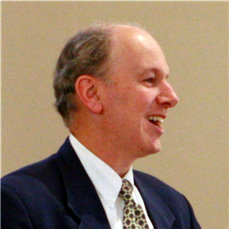
Doug Scalise, Brewster Baptist Church
Jesus, The Good Shepherd from BBC Staff on Vimeo.
[powerpress]
These are simple, familiar and profound words, yet what are we really saying when we pray or speak those words, the Lord is my shepherd. With those words we who are Christians and Americans do a very un-American thing. We make a declaration of dependence. Americans are into independence. We don’t like other people to control us or make decisions for us. We prefer to be in a position of strength where we can dictate what happens or where others are relying on us but not us upon them. We want to lead and not follow. We like our independence, we want to be free to make our own choices and go wherever we want. We don’t like the idea of being domesticated.
Certainly Jesus and his Jewish followers were familiar with the 23rd Psalm. They also would have known the 34th chapter of the prophet Ezekiel which speaks about the destructive leadership of “the shepherds of Israel,” the kings who abused their authority and misused the people, enriching themselves and their cronies while they failed to strengthen the weak, heal the sick, bind up the injured, bring back the strayed, or seek the lost, “but with force and harshness” they ruled the people (see Ezekiel 34:4). In Ezekiel God is portrayed as the Good Shepherd who will seek out, rescue, feed and lead the sheep with justice (Ezekiel 34:11-16).
This rich Biblical image of God as the shepherd of the people in Psalm 23 and Ezekiel 34 and many other passages informs what Jesus says in John 10:11-18: “I am the good shepherd. The good shepherd lays down his life for the sheep. The hired hand, who is not the shepherd and does not own the sheep, sees the wolf coming and leaves the sheep and runs away—and the wolf snatches them and scatters them. The hired hand runs away because a hired hand does not care for the sheep. I am the good shepherd. I know my own and my own know me, just as the Father knows me and I know the Father. And I lay down my life for the sheep. I have other sheep that do not belong to this fold. I must bring them also, and they will listen to my voice. So there will be one flock, one shepherd. For this reason the Father loves me, because I lay down my life in order to take it up again. No one takes it from me, but I lay it down of my own accord. I have power to lay it down, and I have power to take it up again. I have received this command from my Father.”
According to the Jewish Scriptures, some of the greatest leaders in Israel’s history had been shepherds. God appeared to Moses while he was tending sheep (see Exodus 3:1-6), David learned to fight courageously by defending his father’s sheep against predators and later with God’s help he defeated Goliath and other enemies (1 Samuel 17:34-35). The Good Shepherd is a key image in John’s Gospel. John 10:1- 6 introduces the image of the shepherd by describing how a shepherd enters the sheepfold through the gate, calls the sheep by name, and leads them out to pasture. In John 10:7-18 Jesus identifies himself as the good shepherd, who lays down his life for his sheep. The Good Shepherd does four things.
- Lays down his life for the sheep
- Knows his own and his own know him.
- Has other sheep to bring into the fold.
- Works for unity because the goal is one flock, one shepherd.
Jesus the Good Shepherd lays down his life for the sheep. This is stated in verses 11, 15, 17, and 18. This was not common behavior for the shepherd. After all, sheep were used for food, clothing, and sacrifices. The idea that the shepherd would die for a sheep reflects a level of devotion and caring that is extraordinary. Jesus compares himself with a hired hand who is not the shepherd and does not own the sheep. That individual is not personally invested in the sheep, doesn’t care about them, and runs away at the first sign of trouble leaving the sheep to be mauled and scattered. Jesus says he is the Good Shepherd who cares for the sheep; he doesn’t run away from the sheep when trouble comes, he willingly intervenes and defends us even to the point of being willing to die to save us. He will not abandon us or forsake us. The Good Shepherd is aware of all the sheep in his flock and cares for them all. He is not some hired hand just out to make a profit on the sheep.
 I like the story about the shepherd who was herding his flock in a remote pasture by a seldom traveled road when suddenly a brand-new Cadillac Escalade drove towards him. The driver, a young man in an expensive suit and sunglasses, leans out the window and asks the shepherd, “If I tell you exactly how many sheep you have in your flock, will you give me one?” The shepherd looks at the man, then looks at his peacefully grazing flock and calmly answers: “Sure. Why not?” The man parks his car, whips out his iPad, goes to a NASA page on the Internet, where he calls up a GPS satellite navigation system. He feeds it to another NASA satellite that scans the area in an ultra-high-resolution photo. Then the young man opens the digital photo in Adobe Photoshop and exports it to an image processing facility in Hamburg, Germany. Within seconds, he receives an email that the image has been processed and the data stored. Finally, he prints out a full-color report on his HP LaserJet printer and turns to the shepherd and says, “You have exactly 1586 sheep.”
“That’s right.” says the shepherd. “Well, I guess you can take one of my sheep,” He watches the young man select one of the animals and looks on amused and concerned as the young man begins to put it in the back of his vehicle.
Then the shepherd says to the man: “Hey, if I can tell you exactly what your business is, will you give me back my sheep?”
The young man thinks for a second and says, “Okay, why not?”
“You’re a consultant,” says the shepherd.
“Wow! That’s correct,” says the man, “but how did you guess that?”
“No guessing required,” answered the shepherd. “You showed up here even though nobody called you; you want to get paid for an answer I already knew;
to a question I never asked; and you know nothing about my business.
Now give me back my dog.”
A hired hand doesn’t care for the sheep, but the Good Shepherd cares enough to lay down his life for the sheep.
The second thing about the Good Shepherd is Jesus says, “I know my own and my own know me, just as the Father knows me and I know the Father.”
Jesus and the Father know each other intimately. We’re invited to have as close a relationship with Jesus and he does with the Father. To have a close relationship with anyone means investing time and energy in the relationship. One of the great experiences of my life was the sabbatical BBC enabled me to take in 2003 because for our family it was an incredible gift to spend so much time together. I probably saw more sheep on that sabbatical trip in the United Kingdom than at any other time in my life. One incident that stood out happened near the border between England and Scotland at an old Roman fort called Housesteads that was part of Roman Emperor Hadrian’s wall. It is a beautiful place with lots of sheep grazing around second century Roman ruins. There were a whole bunch of sheep wandering around when one lamb really started calling out loudly looking for its mother because it was hungry. I swear to you and my family will back me up, it actually sounded like the lamb was saying, “where?” and the mother would reply, “here…” This happened about three or four times with the mother and lamb moving closer to each other at the sound of each other’s voice until the lamb saw the mother and ran and hit her so hard he looked like a football player making a tackle. Just as a mother sheep knows her lamb and the lamb knows his mother, so Jesus knows us and we have the opportunity to know him. Through his words and deeds in the Gospels, prayer, worship, Bible study, service in his name, and the guidance of the Holy Spirit we can come to know Jesus as closely and personally as lamb knows its mother.
Jesus also says that He has other sheep to bring into the fold. Jesus is always looking to bring more sheep, more people, into God’s flock. We are among those who have been brought into the fold by Jesus. And Jesus wants us to help find other sheep who are out there wandering around, lost and helpless like sheep without a shepherd. Once we become a part of Jesus’ flock, we never lose the responsibility of helping others find what we are now enjoying. There is a nice book by Phillip Keller called A Shepherd Looks at Psalm 23. Keller tells about his experience as a shepherd in East Africa. The land adjacent to his was rented out to a tenant shepherd who didn’t take very good care of his sheep; his land was overgrazed, eaten down to the ground; the sheep were thin, diseased by parasites, and attacked by wild animals. Keller describes how his neighbor’s sheep would line up at the fence and blankly stare in the direction of his green grass and his healthy sheep, almost as if they yearned to be delivered from their neglectful, abusive shepherd. They longed to come over to the other side of the fence and belong to him. In the same way, Jesus has other sheep to bring into his flock and we can help them to find their way.
The fourth thing to note in these verses from John 10 is that Jesus’ goal is unity – one flock, one shepherd. Among those in the faith community that first heard John’s Gospel it is likely that there were Jews, Samaritans, and Greeks. Three groups with distinctive histories, cultures, and languages, yet, they all came together around Jesus, the Good Shepherd who willingly laid down his life for the sheep. In John 17 Jesus prays that all his followers would be one. Jesus is a unifier, not a divider and it is sad to me when people use their Christian faith as a weapon or a means of division rather than as a source of unity. As members of God’s flock the church, it is imperative, it is incumbent upon all of us that we strive for unity in the body of Christ.
If we had time to read further in John 10:22-30 we would hear Jesus say in verse 28 that no one will snatch the sheep that hear his voice and follow him out of his hand. Later in John 13:37-38 Peter says to Jesus, “I will lay down my life for you…” But Peter was not yet ready to lay down his life for Jesus and instead denies knowing him or being associated with him three times. Peter represents disciples who are not yet ready to lay down their lives for Jesus or each other.
At the end of the Gospel of John (21:15-17), the resurrected Jesus who had laid down his life in order to take it up again just as he said, tells Peter three time to “feed my lambs….Tend my sheep…Feed my sheep.”
Peter’s task must be understood in light of what Jesus said in chapter 10 about what it means to be a shepherd. Jesus also states that Peter, like Jesus, the good shepherd, would lay down his life (John 21:18-19) for the sheep.
It was not common that a shepherd would die for the sake of a sheep, but Jesus was willing to die for us. The power of this image can be seen in its use later on in the New Testament where
Jesus is called ‘the great shepherd of the sheep’ (Heb. 13:20),
‘the Shepherd and Guardian of your souls’ (1 Pet. 2:25), and
‘the chief Shepherd’ (1 Pet. 5:4).
Isaiah 53:6 says, “All we like sheep have gone astray; we have all turned to our own way.” Imagine a shepherd who notches the ear of a lamb born to his flock. He has rightful ownership, but the lamb wanders away and gets lost. The shepherd searches near and far for the lost lamb but can’t find it. A long time later at an animal auction he finds not a baby lamb but a grown sheep for sale. The shepherd recognizes his mark on that sheep’s ear and goes to the auctioneer and says, “I can see my mark, the sheep is mine.” The auctioneer callously replies, “Listen, you have to bid and pay just like anyone else.” The shepherd bids and bids determined to get his sheep back and pays an outrageous price, far above reasonable market value to get his sheep. He now has a double right to the sheep from birth and from redemption. In the same way, God has a right to own us as creator and redeemer because God gave us our life and Jesus laid down his life, and shed his blood, an outrageous price far above our value, in order to redeem us back into God’s flock.
Jesus is the Shepherd who is our Savior. Jesus is the Shepherd who was willing to lay down his life like a lamb that we might be part of God’s flock. That is why in John’s vision of heaven he says it will be like this in Revelation 7:15-17:
“For this reason they are before the throne of God, and worship him day and night, and the one who is seated on the throne will shelter them. They will hunger no more, and thirst no more; the sun will not strike them, nor any scorching heat; for the Lamb at the center of the throne will be their shepherd, and he will guide them to springs of the water of life, and God will wipe away every tear from their eyes.”
Closing Prayer
Jesus we thank you for being the Good Shepherd and for laying down your life for us. Help us to learn to hear and respond obediently to your voice, trusting that you know better than we do what is best for us. Help us to follow your leading, secure in the knowledge that nothing and no one can ever snatch us out of your loving hands. Shepherd and Guardian of our souls, enable us to follow you faithfully every day of our lives and use us to bring other people into your good flock. In the name of the Chief Shepherd we pray, Amen.
Blessing “Now may the God of peace, who brought back from the dead our Lord Jesus, the great shepherd of the sheep, by the blood of the eternal covenant, make you complete in everything good so that you may do his will, working among us that which is pleasing in his sight,
through Jesus Christ, to whom be the glory forever and ever. Amen. (Hebrews 13:20-21)