
Faith That Continually Seeks Understanding
I apologize that my message today may not sound like a Mother’s Day sermon, but that’s because I was going to be giving it last Sunday until our worship plans changed and we had the wonderful sharing from the folks who went on the mission trip to Bulgaria. I want to talk with you today about a person in the Bible I admire who you may not have heard a lot about, his name is Philip. Not the Philip who is one of the Twelve apostles whose name appears in the four lists of the apostles in Matthew 10:3; Mark 3:18; Luke 6:14; and Acts 1:13. This Philip is a remarkable instrument of God because every aspect of his life and ministry that we know of was part of God enlarging the family of faith.
May 13, 2012
Acts 8:26-40, Faith That Continually Seeks Understanding
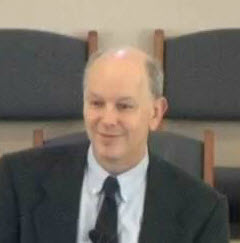
Doug Scalise, Brewster Baptist Church
Faith That Continually Seeks Understanding from BBC Staff on Vimeo.
[powerpress]
When we had Dan Buttry from International Ministries with us in March he spoke about the difference between the mainstream and the margin. Philip was used by God to reach out to people on the margins. You may recall that most of Jesus’ very first followers were Jewish, that was the mainstream, but Philip belonged to the first group of Greeks or Hellenists who became part of the community of disciples of Jesus. They were the first folks on the margin who expanded the circle of the church.
Philip the Evangelist, first appears in the New Testament in Acts chapter six when he is appointed (along with Stephen and others) to supervise the daily distribution of food to the widows following the dispute between the ‘Hellenists’ and the ‘Hebrews’ (Acts 6:1-7), “Now during those days, when the disciples were increasing in number, the Hellenists complained against the Hebrews because their widows were being neglected in the daily distribution of food. 2 And the twelve called together the whole community of the disciples and said, “It is not right that we should neglect the word of God in order to wait on tables.a 3 Therefore, friends, select from among yourselves seven men of good standing, full of the Spirit and of wisdom, whom we may appoint to this task, 4 while we, for our part, will devote ourselves to prayer and to serving the word.” 5 What they said pleased the whole community, and they chose Stephen, a man full of faith and the Holy Spirit, together with Philip, Prochorus, Nicanor, Timon, Parmenas, and Nicolaus, a proselyte of Antioch. 6 They had these men stand before the apostles, who prayed and laid their hands on them.”
 The fact that Philip is listed second in the list of the seven Greek men suggests he may have been one of the most obvious and logical choices and it may reflect that Stephen, who was the first martyr (Acts 7:54-60), and Philip were the two who ended up having the greatest impact on the early church. Philip must have been someone who was respected since he was “of good standing” in the church and he was full of the Spirit and of wisdom. Throughout Acts, we see a great reliance on the leadership and moving of the Spirit in determining and shaping the work and outreach of the church and individual believers. Sometimes in Acts and sometimes in our lives, the Spirit has to almost drag people into God’s future because we can be so set in our ways or resistant to the new thing that God is doing that we think we know better than the Lord what God will or won’t do.
Philip must have been very capable because just a little while after being asked by the Nominating Team to help with the early church’s version of the Caring Cupboard, he was doing far more than making sure the Hellenist widows were getting their fair share of food. We’re told in Acts 8:5-13 that after the martyrdom of Stephen, Philip brought the gospel to Samaria. You may remember that the Jews were very prejudiced toward the Samaritans, to the Jews the Samaritans were way out on the margin, but Jesus spoke with a woman of Samaria in John 4 and told a parable in which the Samaritan was the admirable hero (Luke 10:25-37). If Jesus was in the Holy Land today speaking to his fellow Jews it would be the parable of the Good Palestinian. The Lord is always stretching his followers, encouraging us to a faith that continually seeks understanding and is open to fresh revelation from God.
Philip follows the example of Jesus in going to people that others dismissed as being unacceptable to God, despised, or looked down upon. In Acts 8:5-13, “5 Philip went down to the city of Samaria and proclaimed the Messiah to them. 6 The crowds with one accord listened eagerly to what was said by Philip, hearing and seeing the signs that he did, 7 for unclean spirits, crying with loud shrieks, came out of many who were possessed; and many others who were paralyzed or lame were cured. 8 So there was great joy in that city. 9 Now a certain man named Simon had previously practiced magic in the city and amazed the people of Samaria, saying that he was someone great. 10 All of them, from the least to the greatest, listened to him eagerly, saying, “This man is the power of God that is called Great.” 11 And they listened eagerly to him because for a long time he had amazed them with his magic. 12 But when they believed Philip, who was proclaiming the good news about the kingdom of God and the name of Jesus Christ, they were baptized, both men and women. 13 Even Simon himself believed. After being baptized, he stayed constantly with Philip and was amazed when he saw the signs and great miracles that took place.”
Not only does Philip go to Samaria, but much like Barnabas does for Saul, he’s willing to mentor and disciple a Samaritan magician named Simon when most people would either have ignored him or looked down their nose at him in spiritual triumphalism. Philip is practicing a faith that continually seek to understand what the Lord is doing and he’s willing to go where the Spirit leads and to talk with and befriend people on the margin that more mainstream Jewish believers might have had a real problem even talking to, much less sharing life together. And those people on the margin respond to the good news with great enthusiasm and in significant numbers.
Having proven his faith, wisdom, flexibility, and openness, the Lord uses Philip again in a rather dramatic way. In Acts 8:26-39, Philip meets and baptizes an Ethiopian eunuch. This is another in a series of conversion stories (with Simon the Samaritan Magician in Acts 8:9-13, Saul in 9:1-19 and Cornelius the Italian centurion in chapter 10) that all demonstrate God’s role in initiating the community of faith’s mission to people who were not Jewish and were on the margin of the growing Jesus movement. Listen to the story.
“Then an angel of the Lord said to Philip, “Get up and go toward the south to the road that goes down from Jerusalem to Gaza.” (This is a wilderness road.) So he got up and went. Now there was an Ethiopian eunuch, a court official of the Candace (kan-duh-see), queen of the Ethiopians, in charge of her entire treasury. He had come to Jerusalem to worship and was returning home; seated in his chariot, he was reading the prophet Isaiah. Then the Spirit said to Philip, “Go over to this chariot and join it.” So Philip ran up to it and heard him reading the prophet Isaiah. He asked, “Do you understand what you are reading?” He replied, “How can I, unless someone guides me?” And he invited Philip to get in and sit beside him. Now the passage of the scripture that he was reading was this (Isaiah 53:7-8): “Like a sheep he was led to the slaughter, and like a lamb silent before its shearer, so he does not open his mouth. In his humiliation justice was denied him. Who can describe his generation? For his life is taken away from the earth.” The eunuch asked Philip, “About whom, may I ask you, does the prophet say this, about himself or about someone else?” Then Philip began to speak, and starting with this scripture, he proclaimed to him the good news about Jesus. As they were going along the road, they came to some water; and the eunuch said, “Look, here is water! What is to prevent me from being baptized?” He commanded the chariot to stop, and both of them, Philip and the eunuch, went down into the water, and Philip baptized him. When they came up out of the water, the Spirit of the Lord snatched Philip away; the eunuch saw him no more, and went on his way rejoicing. But Philip found himself at Azotus, and as he was passing through the region, he proclaimed the good news to all the towns until he came to Caesarea.”
In just a couple sentences we learn a great deal very quickly about the man Philip meets. First, we learn he is Ethiopian which means he is almost certainly a black African from the region that today is known as Sudan. Secondly, we’re told that he is a eunuch that means he lacked the capacity to procreate and according to Deuteronomy 23:1, eunuchs were among those who were excluded from the assembly of the Lord. Eunuchs were excluded from participation in Temple rituals and from full admittance, as converts, into Israel’s community. As a eunuch he is ritually and religiously far off on the margin. The third thing we’re told about him is that he was the Treasury Minister which means the Queen must have thought he was extremely trustworthy. The fourth thing we discover is that even though Deuteronomy says people like him were “not to be admitted to the assembly of the Lord” because of his physical condition, “he had come to Jerusalem to worship.” Finally, starting the journey home, he was reading from a copy of the prophet Isaiah. That was not available in paperback or on a Kindle or iPad at the time, so it likely would have cost a little bit of money to have a copy for your personal use. The Ethiopian is a man whose faith motivates him to worship and who is still seeking understanding, he is open to the Spirit’s leading and open to being taught.
Philip possesses many of these same qualities so the Spirit brings the two men together on the road to Gaza. An angel of the Lord told Philip to go to this road so he went. The Spirit tells him, “Go over to this chariot and join it.” So Philip “ran up to it.” Philip is told “Go,” and he runs to comply with the command. Philip initiates a conversation and the Ethiopian invites him to sit with him in the chariot. Notice that their conversation is marked by questions; first Philip asks one, then the Ethiopian asks two, and Philip’s sharing is based on the Ethiopian’s questions. Then, “starting with this scripture, he proclaimed to him the good news about Jesus.”
Philip the evangelist is a great role model for us when it comes to sharing our faith with others for several reasons: he’s not afraid to go to people different than himself. Can you picture the contrast in physical appearance and dress between Philip and the Ethiopian? Philip must have looked rather haggard having only recently fled Jerusalem with possibly just the shirt on his back because of the persecution that followed the murder of Stephen. The Ethiopian was a Treasury Minister and a learned man able to ascertain the literal meaning of the scriptures. Yet, he did not allow his attainments to blind him to his limitations or his own need. The Ethiopian is both ethnically and geographically far from Jerusalem, yet the Spirit works to bring him near.
When the excited new convert sees water and asks, “What is to prevent me from being baptized?” And he and Philip go into the water and he is baptized. It’s interesting we never learn the Ethiopian’s name. In that sense he is like a representative character, he is the one who will bring the good news about Jesus to Ethiopia and Africa, thanks to the always growing faith of Philip the evangelist. God often orchestrates unlikely relationships to permit people on the margins, like Greek widows, Samaritan magicians, and Ethiopian eunuch treasury ministers, to hear the good news and become part of the family of faith.
Sometime we may find ourselves on strange roads and come across needs that we just happen to have the ability to help meet. Other times, we may be the person lost, broken and unsure–and someone will find us, ask us a question and share something that helps us see in new ways.
Philip a Greek man, helps feed Greek widows, brings the Gospel to Samaria, shares the good news with a high ranking Ethiopian that helps the Way of Jesus enter into Africa, and all or these encounters are stretching the people of God because the Spirit of God will not be boxed in or contained by the prejudices or preconceived notions of people. In Acts, God is always pushing those of us in the mainstream to reach out to those on the margins.
I think it is cool that the final New Testament reference to Philip is in Acts 21:8-9, where he and his four unmarried daughters, residing in Caesarea, are visited by Paul on his way to Jerusalem. It says, “8 The next day we left and came to Caesarea; and we went into the house of Philip the evangelist, one of the seven, and stayed with him. 9 He had four unmarried daughters who had the gift of prophecy.” We probably shouldn’t be surprised that with all the bridges God used Philip to build and all the walls the Spirit used Philip to tear down, that he had four unmarried daughters who all had the gift of prophecy. Luke Skywalker might even say, “The faith runs strong in that family.”
There is a current commercial for Allstate insurance that portrays a young man with an inexpensive car and an older man with a luxury car who’ve had an accident. Have any of you seen it? They have their own voices but then they are voiced over by the Voice of Allstate. The Voice comes from both of them and the younger man says, “We’re connected,” and the older man replies, “No we’re not.” “Yes, we are.” “No.” And then the young man just looks at him.
Sometimes we don’t want to believe or see how we’re connected to people different from us who may be on the margins, we’d rather be separate. But we are connected. And God’s Spirit might just send the modern day equivalent of a widow, a Jew, a Greek, a Samaritan, an Ethiopian eunuch, even an unmarried woman to challenge and stretch our faith or to lead us to faith. Sometimes we are the one with questions, sometimes we may be the one with the answers.
However, if we learn anything from Philip, we learn that our faith needs to be one that continually seeks to be open to what the Lord is doing now. The Ethiopian goes on his way home rejoicing for the new life that has come to him in Jesus. Philip heads off and “he proclaimed the good news to all the towns until he came to Caesarea.”
The Way of Jesus continues to grow. And so can we.
Prayer
Jesus, you call to us once more this morning to leave anything that holds us back from deeper love. Grant us courage to leave behind whatever keeps us from you and to trust you with our life. May our connection with you be so strong and true that we will daily risk the road of following in your footsteps. Keep us open to the adventure of life where we meet you day by day. Remind us of the need to be open to how you’re moving in our midst and in the lives of those both in the mainstream and on the margin. Grant us faith continually seeks understanding of you, ourselves, and others. Thank you for the call to be your disciple.
a Or keep accounts